How to Show Fine Art and Freelance on Website
The 12 best social media platforms for artists and designers
If yous want to succeed in digital fine art you demand to master more than than 1 social media platform. From TikTok to Twitch these are excellent places to showcase your best work and promote yourself as a artistic.
Your online presence could help yous to secure a new job, gain freelance clients or creative collaborators, as well as build your professional reputation. Artists like Loish have mastered the fine art of social media utilize, and y'all acquire from her besides, read in her tips for marketing yourself on social media.
But with then many social media platforms to choose from, how exercise you know which ones to use? To detect out, we listened to the advice of a range of artistic professionals including artists, photographers, designers and filmmakers. Nosotros learned what they similar well-nigh each social media platform and why you might notice each one useful for displaying elements of your portfolio (for more portfolio inspiration, run across our graphic design portfolio post), or perhaps something else.
We used their answers to list the most useful social media platforms for artists and designers right now. Besides check out our guide to how to brand social media work for yous and our ultimate guide to social media for creatives.
01. Discord
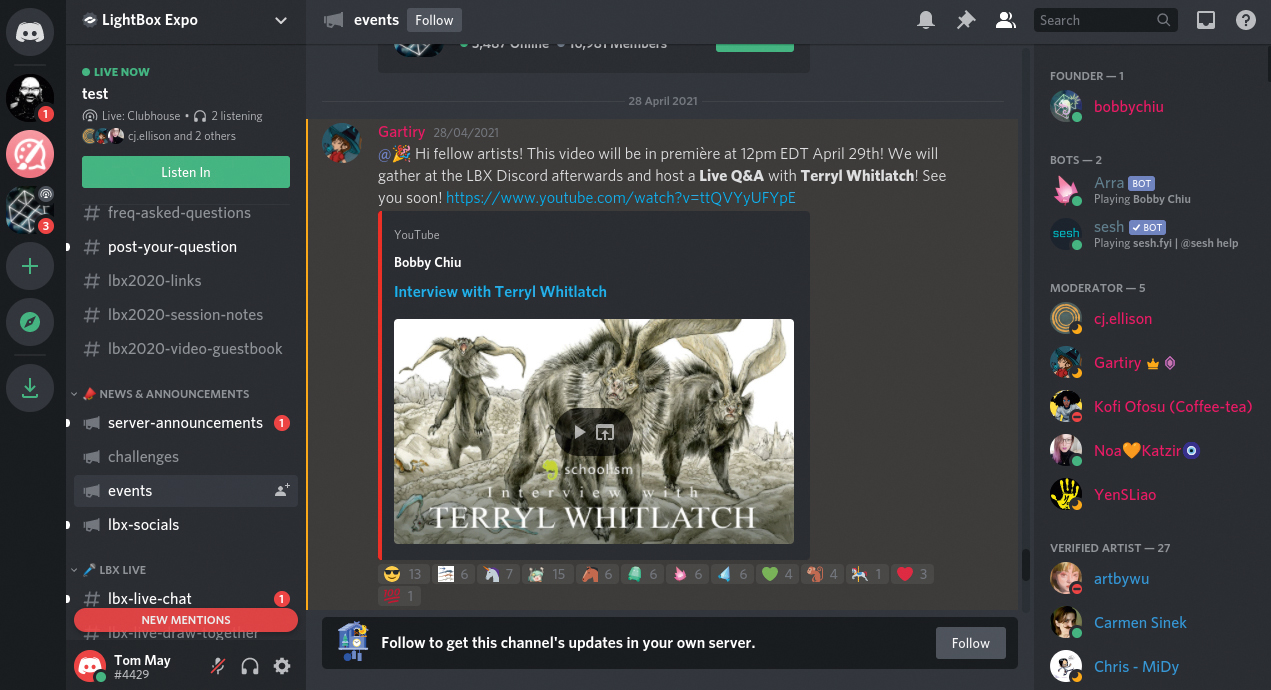
Founded in 2015, Discord may not exist top of your listing of obvious social media platforms for artists and creatives, but because this web and mobile app is focused
on enabling specific communities to hang out and connect, rather than but a sea of random followers, in the Covid era, information technology'south really taken off.
"I became an avid Discord user once everyone started working from home," says LA-based concept designer and illustrator Airi Pan. "It offers voice, text options and streaming options, so it's perfect as a 'virtual hang spot' for friends or coworkers.
"I use it in vox format, to mimic working alongside them, equally nosotros hunch over our tablets drawing. It'due south similar a virtual common room! Information technology likewise acts as a community hub for events such as LightBox Expo, Weekend Warrior Painters, or pocket-size groups of artists who are just trying to get meliorate."
Spiridon Giannakis, a German designer and publisher of art books, recently launched a Discord server to chat about his projects, too every bit mental health issues (visit Artbook News to learn more). "The surround on Discord is really positive," he enthuses. "With the aid of moderators, everything can be kept very tidy, and conversations are extremely valuable. It's a chip like the feel of a forum, with the addition of newer tech aspects."
He hasn't had a single negative run into on Discord so far. "Unlike most social media, which just makes me wonder every twenty-four hours if I really need it. It'southward all been positive," he says. "My server now has over a 1000 people: I never expected so many. I always thought art books are very niche, but information technology'southward shown me that the interest is there."
02. Twitch
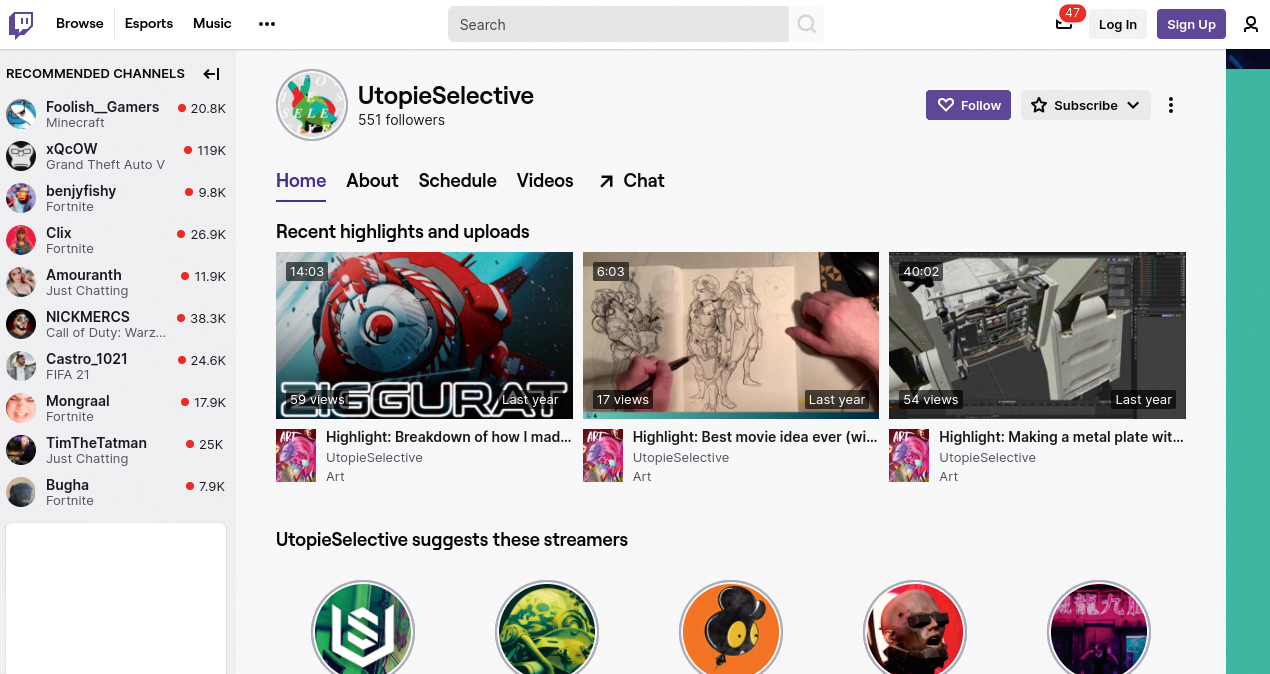
If you're looking to build a wider audience for your art, and augment your appeal, then Twitch is the social media platform of option. Launched in 2011, this live-video platform was originally adult for gamers. Just artists are likewise using it to live-stream their process, make new contacts and grow their personal make.
Montreal-based art director and lead concept artist Nicolas Vallet is among them. "Long story curt: I wanted to connect," he explains. "Living in Communist china at the time, I was very focused on my day-to-day work, but quite bad at publicising myself. Art streams are a nice way to split the divergence. I get to depict and talk to people, at the same fourth dimension every bit practising my technique."
Vallet's Twitch channel stayed small for a while, but the pandemic meant he had more than free time. "And so I added extra days, and my audience began to grow. I'd ask questions to know people better, and let them share their own experiences. I started to concenter regular viewers, and some of them are friends at present." He has this communication to anyone alive-streaming on Twitch: "People like free energy and passion, and then share that first and foremost. And be consistent: a regular schedule will help people to notice you."
03. TikTok
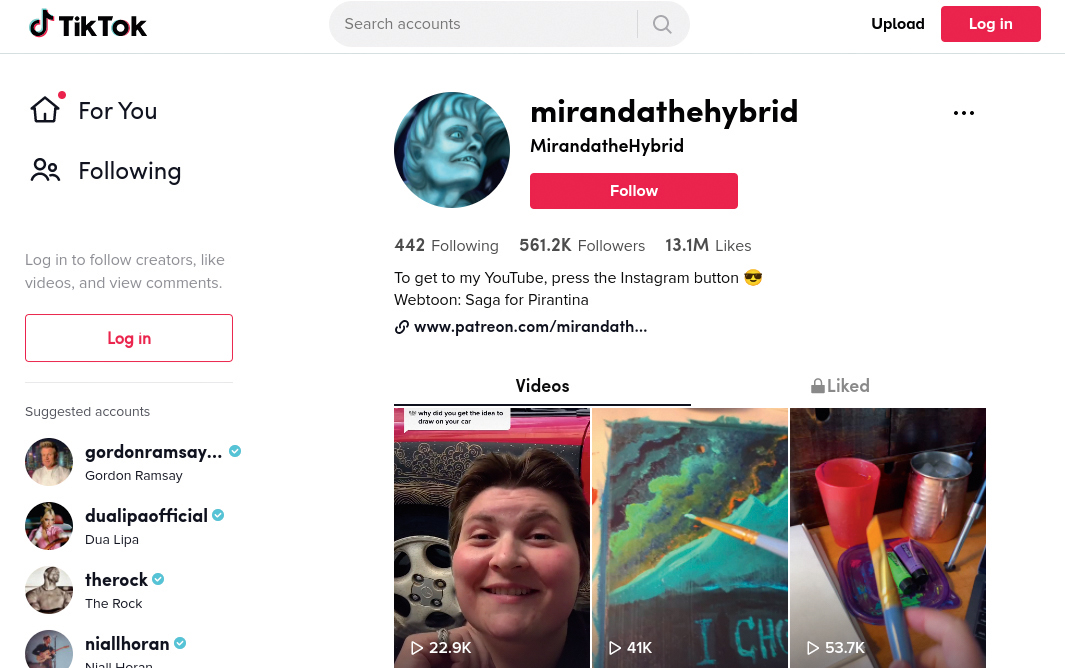
Only as Twitch is mainly known for gaming, nigh people acquaintance TikTok with lip syncing and daft challenges. Withal the brusk-form video app, which has almost 700 million active users, is alluring artists likewise.
"I was introduced to TikTok by a friend and saw the potential for high exposure," says Ohio-based animator and illustrator Miranda Pavelle (@mirandathehybrid on TikTok). "My start 'viral' video was just a sketch of my Miata, and it received 6,000 likes and 20,000 views in a day or two, which is more than attention than I'd ever gotten on other social channels."
Miranda now has more than than half a million followers, and likes how the brevity of TikTok videos forces you to exist snappy and to the point. "I dear teaching and sharing my cognition in bite-sized, light-hearted form," she says. "My art videos are miniature versions of full tutorials, then if you see something useful, y'all can become to my YouTube and become the full lesson."
Her advice for launching a TikTok channel is simple. "Be yourself," she stresses. "Trends rack in views, but they eventually die and make way for something else. What never dies is people connecting to you equally a person: your quirks, your procedure, yous getting bubbly over what you're passionate almost. Gen Z and millennials are pretty darned tired of being advertised to; and then don't jump on the app with the
intention of starting a concern or getting views, considering people will be able to tell."
04. Clubhouse
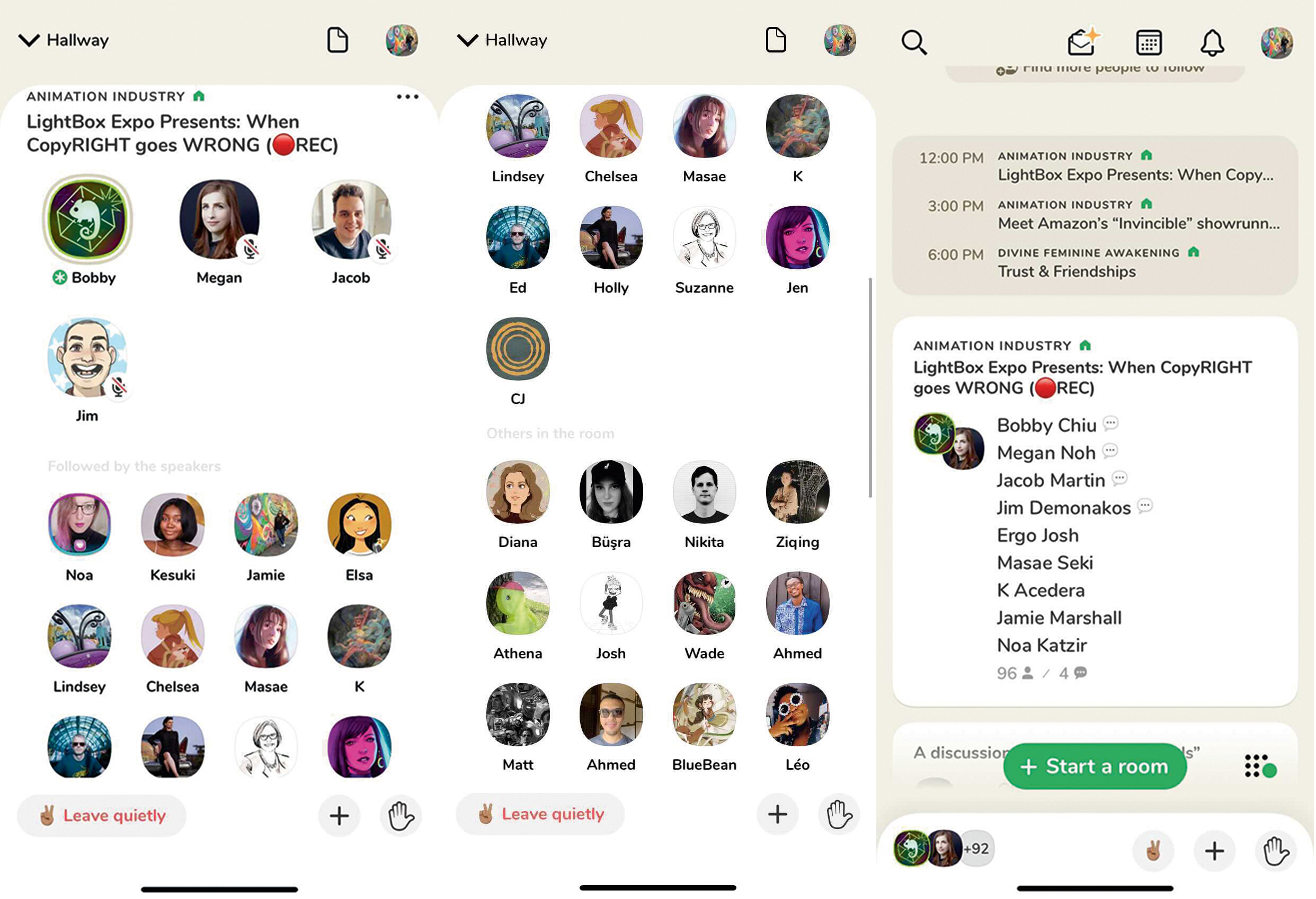
Clubhouse was launched in 2020 and is a voice-based social platform that hosts virtual rooms for alive discussions. It's an iOS and Android app that at fourth dimension of writing was invite just. If you want to acquire about Clubhouse, come across our guide, what is Clubhouse?
Existence audio only, y'all might not think visual artists would be interested in Clubhouse, but in fact there's quite a bit going on. For instance, LightBox Expo hosts a regular discussion in that location every Tuesday at 9am PST, with big-name creatives such as Karla Ortiz, Brynn Metheney, Lorne Lanning and Elsa Chang taking role. If you're non on Clubhouse, you tin can heed in in on Discord.
Airi, who'southward called @pix_bun on Clubhouse, recently participated in a LightBox session called 'Fake information technology till you lot make it, but keep it genuine'. "It was delightful!" she recalls. "The discussion was well-paced cheers to the moderators such as Bobby Chiu." Usually though, she uses Clubhouse equally more of a podcast app, as something to listen to while she works.
"You can hear veteran industry professionals speak, and hear great tips you won't get from a scripted interview," Pan says. "Depending on the talk, it tin feel similar people conversing right next to you, which makes working from home a little less solitary."
05. Dayflash
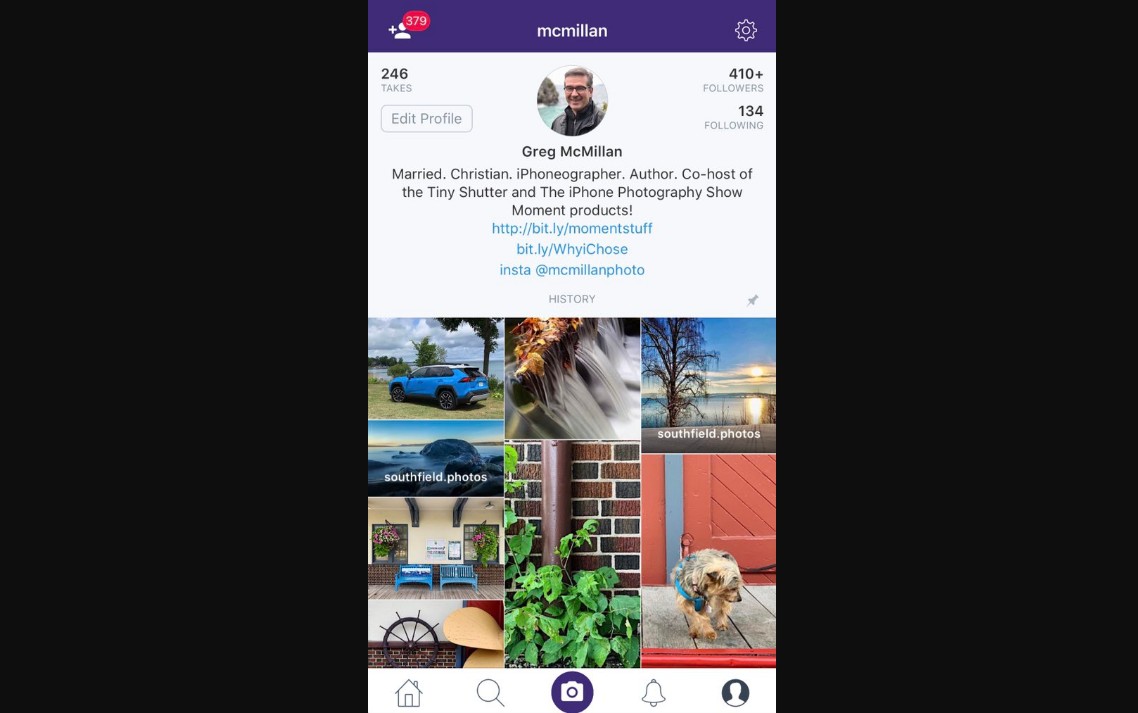
Never heard of Dayflash? You're not lone. Just right now, it's rapidly gaining popularity amongst creatives. And that's because the iOS app, launched last year, basically works like Instagram used to. In its ain words, there'southward "no algorithm and no more than missing posts from your friends".
Co-founder Rupali Renjen tells us that, in her view, "Photograph sharing platforms unfairly use algorithms to dictate which followers get to run into a user's posts. And as they push button users to spend more than time on stories from friends, long-form videos and shopping, all so they can make more than money on ads and business organisation accounts, less and less time is beingness spent on creators, which is taking away visibility and opportunity".
Y'all can mail full resolution photos, no algorithms, always genuine engagement, no bots
David Castillo
And creatives do indeed seem to be responding well to the new platform. "I dearest using Dayflash," says New York lensman David Castilllo. "You tin postal service full resolution photos, no algorithms, e'er 18-carat date, no bots. And I honey the aesthetics of the interface."
Scott Terry, a Chicago-based creator and administrator for brands, agrees. "Information technology'south pretty great considering you can postal service total frame and high resolution, unlike Instagram," he points out. And at that place'due south video, besides.
"For me personally, I love being able to show my work as I've fabricated it, rather than being compressed like on Twitter or Instagram," says filmmaker Tyler Palmer. "And fifty-fifty with picayune following, my piece of work all the same gets seen."
LA-based lensman Torenzo Perry is also a fan. "I personally love the app considering information technology focuses more on the content, and less on the likes and views," he says. While Greg McMillan, an iPhoneographer and co-host of the Tiny Shutter podcast, admires both the app and the philosophy of its makers. "They have information technology figured out as to what a social platform should be and how information technology should work," he enthuses.
And information technology'south not just photographers who are fans. Have Brazilian grapheme artist Danielle Pioli, who uses it to share her illustrations and comic strips. "I really like Dayflash," she says. "Since I began using information technology, it has improved a lot. Non only the usability of the app simply besides the quality of the content inside information technology. I encounter this app equally a new trend for visual artists of all kinds. It'due south like shooting fish in a barrel to utilise, pretty straightforward, and fun.
06. ArtStation
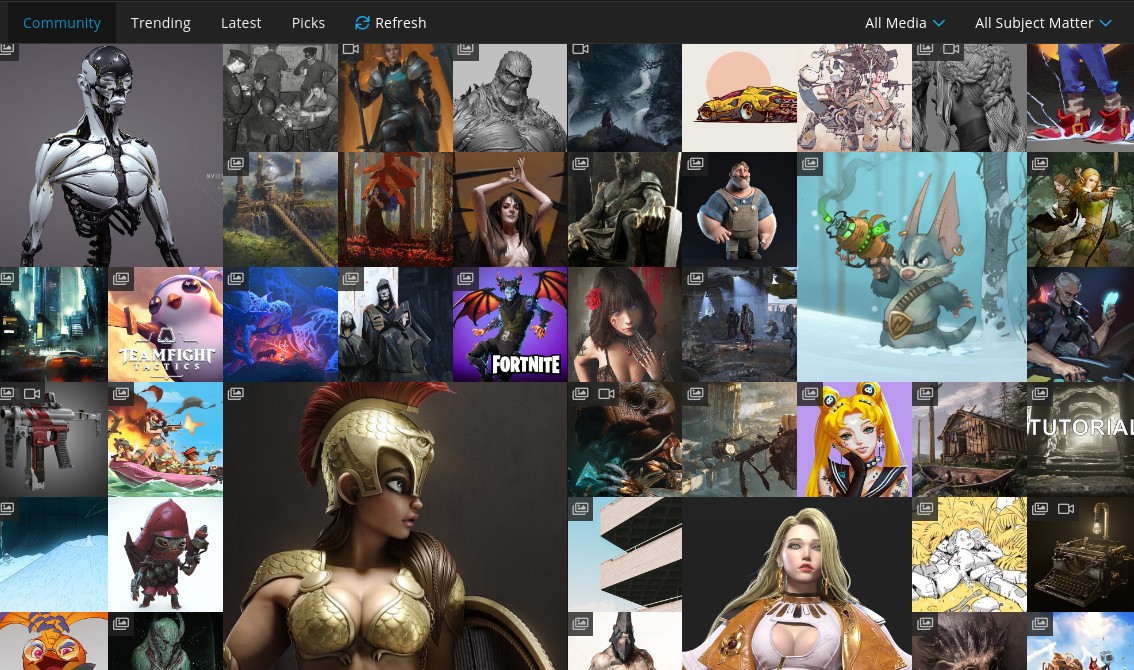
Launched in 2014, ArtStation may non take inverse a bully bargain over the years. Only it remains the place to post your contour for professional person 2D and 3D artists, especially those working in the games, film, media and entertainment industries, or those aspiring to practise so.
As we reported in our commodity how to get a task as a video games artist, recruiters nowadays don't just encourage you to mail your work on ArtStation; they expect it. Some artists still hold back from doing then, because they don't want to engage in what they see as a popularity contest. But by and big, recruiters don't actually care how many likes or followers you have; information technology's purely well-nigh whether or not they like your fine art, and if information technology fits what they're looking for.
"We're interested in artists who produce the sort of piece of work that we can use; that's it," says Kevin McDowell, fine art manager for Artistic Assembly's Total War series. "So make certain it's visible to us, and don't worry about the numbers."
07. DeviantArt
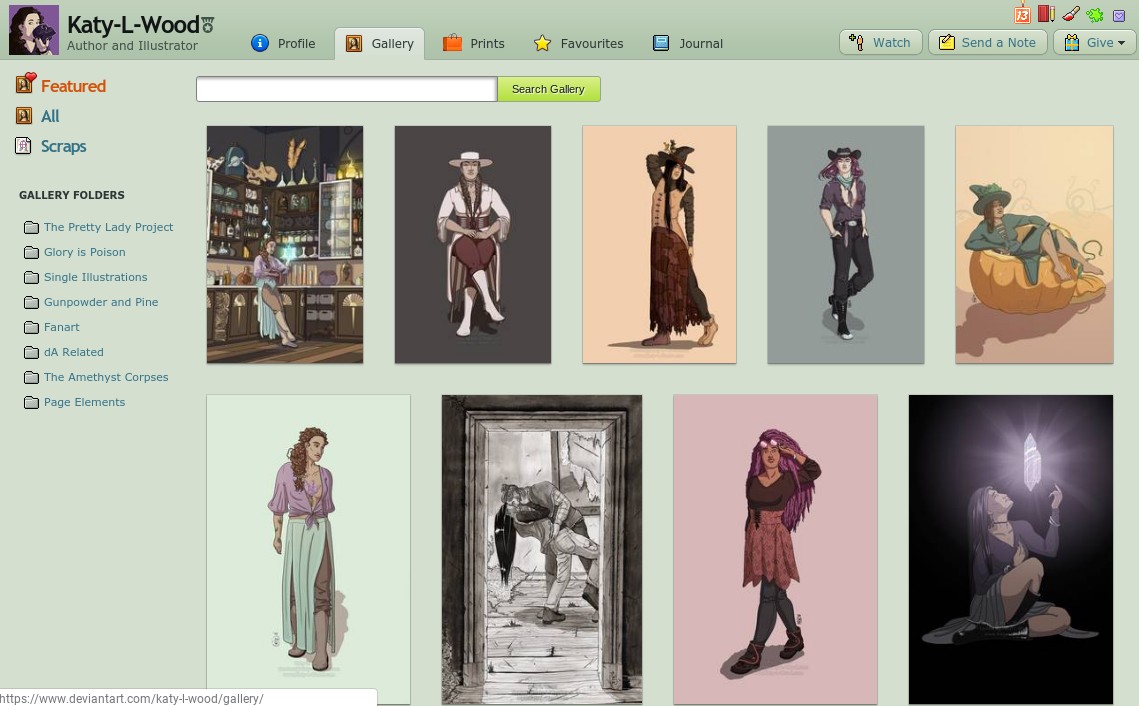
Launched in 2000, DeviantArt has more of an amateur, hobbyist experience to it than ArtStation. And so while you're less likely to become commissions direct through it, information technology'due south a improve platform for putting your fine art in front end of your peers and getting feedback.
People tend to come up and go from DeviantArt over time, and author and illustrator Katy L Wood is no exception. "DeviantArt was the offset social media site I joined, nigh 13 years ago, when I was a teenager," she recalls. "It was a huge role of my growth as an creative person, due to all the astonishing free resources it had, from tutorials to brushes to stock. Plus, dorsum and then, DeviantArt had a great community. People really talked and interacted and had fun."
Eventually, though, she felt the community had started to wane and turned her attentions elsewhere. "Yet, in the last yr I've been working my way back into using DeviantArt, specially with its delightful rebrand," she says. "I came back primarily because DeviantArt is straightforward. There are no algorithms to game, it's well organised, and it's supportive of every type of fine art and writing I practice."
08. The Dots
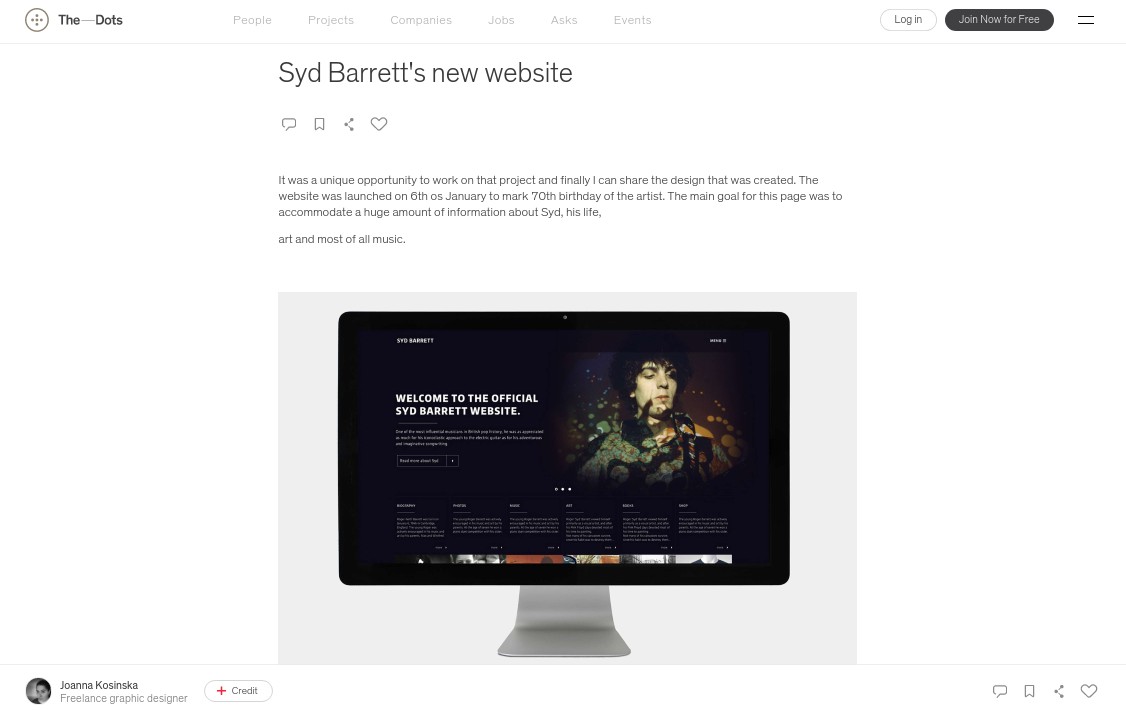
Launched in 2014, The Dots is an online professional network that aims to be "LinkedIn for creatives". And it's had a fair amount of success in doing so, attracting companies such as Google, Burberry, Sony Pictures, Viacom, M&C Saatchi, Warner Music, Tate, Discovery Networks and VICE to use it as a recruiting tool.
There are lot of other things you can exercise on the platform also just waiting to be offered a job, though. These include connecting with other creatives in your field, checking out people'due south side hustles, responding to requests for collaborations, keeping up to the latest events and more.
It's very much a case, and so, of what getting out what you put in. And dissimilar LinkedIn, every page you interact with is beautifully designed.
Currently, virtually creatives seem to employ The Dots as part of a cocky-promo mix, rather than focusing on it exclusively. Yorkshire-based freelancer Joanna Kosinska, for example, says: "I volition post my work pretty much anywhere where I can gain traction, including The Dots, Behance, Dribbble, and Creativepool.
"As a graphic designer and photographer, I accept to put my proper noun out there. And so whatever platform that makes information technology easier to notice my work is my friend, and I'll gladly invest fourth dimension to create a profile and share projects."
09. Dribbble
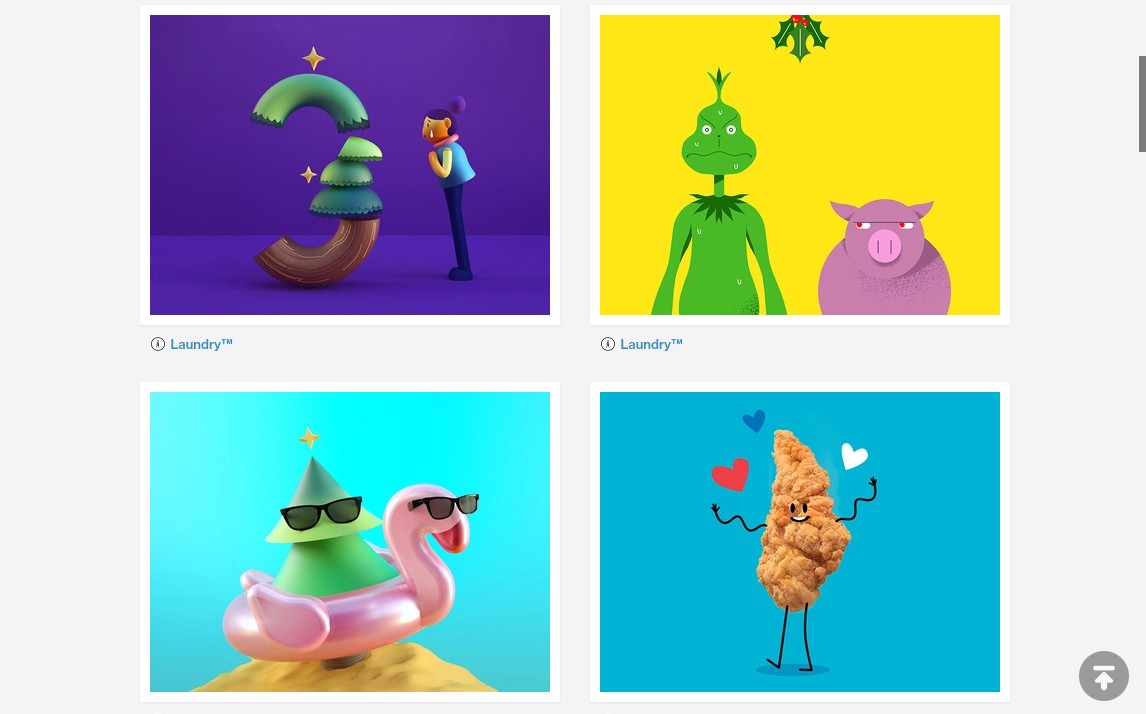
Launched in 2009 past Dan Cederholm and Rich Thornett, Dribbble was never intended to be a straightforward portfolio site like Behance. Its specific angle was about teasing out small-scale glimpses of what you were working on, when you lot were unable to share the whole project.
Dribbble has since evolved beyond spider web and mobile app design to take in icon design, branding, animations, prototypes, illustrations, graphic art and other disciplines. But there's notwithstanding a focus on informally sharing small screengrabs (known equally 'Shots'), rather than setting out big and detailed images in an organised and carefully annotated way. As Albuquerque-based spider web designer Jack Harner puts it: "Dribbble feels more like a customs than a portfolio site."
That doesn't hateful it's simply designers talking to designers, though. The platform now actively helps companies such as Apple tree, Airbnb, Facebook, Google, Dropbox and Slack to hire designers, and many clients use it to find people to commission.
"Dribbble has been a great platform for u.s. to generate new business concern especially within the tech industry," says PJ Richardson, partner at Los Angeles pattern studio Laundry. "Very graphic and illustrated work seems to play the best, just we've also gotten new clients because of what we post there as well."
For others like Nicola Jones, aka Hello I'm Nik Design, Dribbble is a place for posting work that doesn't fit in your master portfolio. "This is where I put my personal project illustrations, which is something I'd like to practise more, so if I e'er get whatsoever illustration enquiries I point them in that location. Analogy is more than of a side thing for me, as I do brand and marketing design before all that for clients."
ten. Behance
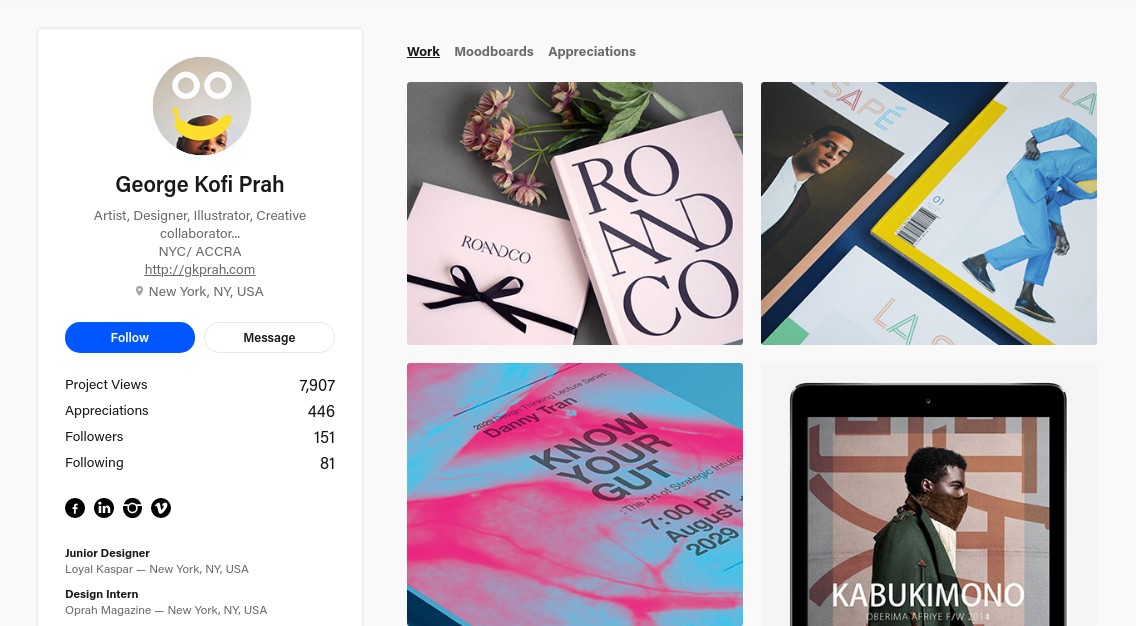
Behance is the closest matter on this list to a pure portfolio platform, merely with a social aspect plugged in. Founded by Matias Corea and Scott Belsky in Nov 2005, the company was acquired by Adobe in 2012, and its reach has since become enormous.
Unlike, say, Dribbble or Instagram, Behance offers a way to show more of your work than just a single, eye-grabbing image. Every bit motion designer and 3D generalist Jesus Suarez explains: "Behance is great for sharing the making of and behind the scenes aspects. It allows for more than complete look at the projection."
Of class, yous could do all that on your ain website, but the social aspects of Behance means that it's worth posting stuff there likewise, if even you're but duplicating the same content.
It is an ideal place for us to share the backside-the-scenes and case study aspects of our projects
PJ Richardson
And that's exactly the approach Laundry takes, says Richardson. "Our Behance basically mirrors our company site," he explains, "but because information technology is then shareable and other creatives go to Behance for artistic inspiration, it is an platonic place for us to share the backside-the-scenes and case study aspects of our projects."
London-based illustrator, designer & photographer Tim Easley takes a like view. "I utilize Behance for full projects alongside my website, because there's a decent adventure of being featured there, which brings in a lot of views," he says. While Cliff Nowicki, a web designer based in Michigan, USA says. "I employ Behance because it's super easy to but put something up online."
11. Instagram
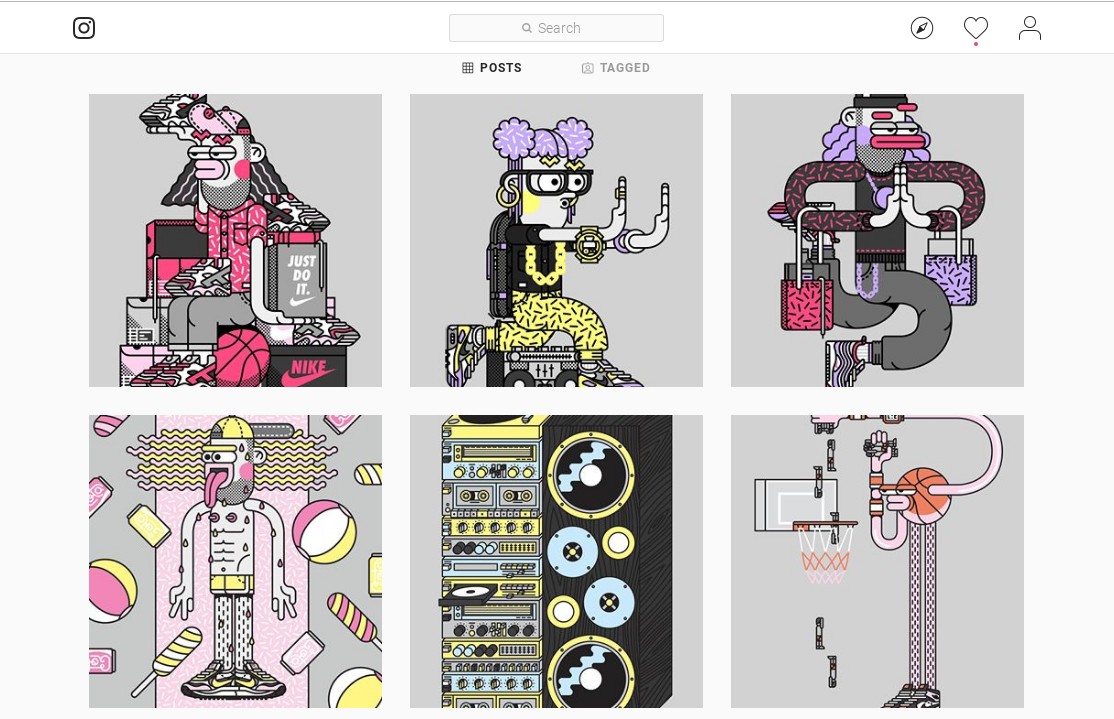
The rise of Dayflash (number one on our list) is a sign that a few people'due south beloved affair with Instagram is waning. But overall, Instagram remains far and abroad the nearly popular visuals-based social media platform today, and for most creatives, a presence of some sort on the image sharing platform remains a must.
"While, Behance is great for sharing and getting your work in front of professional person eyes, I tend to use Instagram more often than not," says George Kofi Prah, designer at New York and LA branding agency loyalkaspar. "Information technology'south the perfect tool for creatives in the manner that Spotify is for musicians.
"It provides access to a much wider audience than whatever other platform and allows me to engage with literally anyone. Using hashtags makes being discovered and finding new and interesting things a lot easier."
Ease of use is too an important factor for many. "I use Instagram, followed by The Dots, considering these platforms are easier and more accessible in terms of commitment per post," says Welsh/Sri Lankan creative person Murugiah. "Behance has also many fields to fill in per post!"
Nosotros need to promote our work where our audience lives
Amy Kilner
For Amy Kilner, freelance designer and founder of inspiration weblog The Design Set up, using Instagram is a no-brainer. "You take to remember nosotros're designing for our clients' objectives, not other creatives," she points out. "So nosotros need to promote our piece of work where our audition lives. Don't become me incorrect, I love artistic sites – I run my own, after all - but information technology'southward not where my clients are!"
Laundry follows the same logic, says Richardson. "Artists and clients alike all seem to go to Instagram for design and animation inspiration, which is why we use it," he reasons. "We've even landed projects from it and clients increasingly ask to track our work at that place. It's also the easiest to share and always has been. Additionally, it is easy to schedule posts without formatting problems."
Luke Manning, creative director of Pencil Studio, is primarily interested in getting work shared amid the creative community, and for that it's been Instagram and Twitter that have been the well-nigh effective, he says. "Our own posts have been picked up shared by pop design blog sites and we've fifty-fifty had direct contact by brand owners via sharing our latest projects," he explains. "I like Behance and how it works, but for united states of america information technology is notwithstanding to be fruitful beyond having a place to shop projects."
And if you lot're wondering how to be successful on Instagram, we've got a piece on how to change the font in your Instagram bio plus a guide packed full of pro tips on how to increase Instagram appointment.
12. LinkedIn
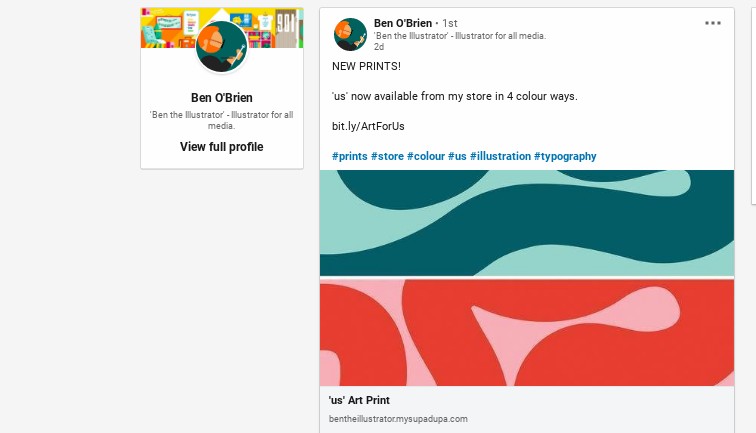
Even though it's had a total rebrand, LinkedIn doesn't immediately grab yous as being a useful social platform for creatives. Just art, design and filmmaking are businesses similar any other, and many creative pros say they're making good utilize of LinkedIn regardless of what it looks like.
Take Frank Suyker, aka Mr Saccharide, an art director based in the Netherlands. "I use LinkedIn to get recurring revenue out of my existing clients," he explains. "By posting my weblog posts on LinkedIn, I'm kept top of mind. And when they do have work that needs to be washed, they come to me."
Laundry has as well made a shift to LinkedIn recently, which it has been actively using for the past year. "Facebook used to be a great place to share work just it became chaotic with ads and not design-focused posts," says Richardson. "in contrast, the very work-focused and curated nature of LinkedIn has made it a forum to share design, blitheness, and behind-the-scenes content, which has garnered a lot of great attending for us."
Read more:
- Social media tips: unmissable communication for artists
- How to make social media work for you
- Instagram Reels vs TikTok: Which should yous be using?
Related articles
Source: https://www.creativebloq.com/features/social-media-for-artists
0 Response to "How to Show Fine Art and Freelance on Website"
Post a Comment